We are pleased to share a new Good Practice Factsheet focused on Thermal management to avoid heat stress during transport.
Take a look here!
See our Laying hens web-page here.
We are pleased to share a new Training report focused on the evaluation of existing training courses about depopulation and killing of poultry on farm
Take a look! https://doi.org/10.5281/zenodo.22640525
See our Poultry training web-page here.
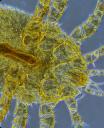
The EU Reference Laboratory for Bee Health is pleased to share a preview of its new explainer video on Tropilaelaps spp.
This video is one of three short animated photomontages explaining the EURL for Bee Health's missions and the European regulatory framework in which it operates — illustrated here through a concrete, topical example: the EURL's support to National Reference Laboratories in strengthening diagnostic and surveillance capacities against Tropilaelaps spp.
This is a draft version — final subtitles in all 24 official EU languages, and the two remaining videos, will be released soon. Stay tuned!
Watch the preview on YouTube
We are pleased to announce that the SafeFood4ClimDiet project will be presented at FoodMicro 2026, the 31st international conference of the International Committee on Food Microbiology and Hygiene (ICFMH), held September 7-10, 2026, in Ljubljana, Slovenia. This year's edition, themed "Revisiting the Roots: Reviving Hygiene in Advancing Food Microbiology," brings together food microbiology experts, researchers, regulators and industry professionals from around the world to discuss sustainable food production, food safety and public health.
The project will be represented through two contributions:
Oral presentation : Thursday, September 10, in session S10: Different Perspectives on Challenging Topics of Food Microbiology in a Changing World
Steve Nanema (PhD student, SafeFood4ClimDiet) will present: "S10-RT5: Ranking Consumer Practices Related to Climate Change from a Microbiological Risk Perspective" (12:10–12:20)
Poster, displayed throughout the congress: "Mapping climate-related food practices: a data-driven framework to anticipate microbiological risks"
More information on the congress: foodmicro2026.icfmh.org
Method for the detection and confirmatory quantification of dye residues in aquaculture products by LC-MS/MS
ANSES/LMV/05/01 - V4 of August 2026
(Restricted access to EURL NRLs)
Stéphanie FRANCO1 and Véronique DUQUESNE1
1 French Agency for Food, Environmental and Occupational Health and Safety (ANSES), Sophia Antipolis Laboratory, Unit of Honeybee Pathology, Sophia Antipolis, France. (European Union Reference Laboratory for Bee Health and World Organisation for Animal Health Laboratory for Infestation of honey bees with Tropilaelaps spp.).
Contact: eurl.bee@anses.fr
To cite this note: Stéphanie Franco and Véronique Duquesne. 2026. “Geographical Spread of the Exotic Mite Tropilaelaps spp.: Suspected Presence in North-Eastern Turkey”. Scientific Note published on the website of the European Union Reference Laboratory for Bee Health on 24 August 2026.
This note presents an update of the geographical distribution and spread of Tropilaelaps spp. mites, parasites of bees and exotic in the European Union (EU), as of 24 August 2026. Previous states of play of the geographical distribution are available here.
The presence of Tropilaelaps spp. is suspected in the Artvin region of Turkey, close to the border with Georgia (Figure 1).
Description
On 26 July 2026, a video showing mites identified as Tropilaelaps spp. in a honey bee colony in the Artvin region of north-eastern Turkey was recorded by Dr. Asli Özkirim, a Turkish researcher. The video was subsequently shared on social media by PHIRA-Science1, a UK-based organisation actively involved in Tropilaelaps research.
The information was relayed by Apimondia2 on 14 August 2026. According to the available information, the mites observed in the video were identified as Tropilaelaps mercedesae. The images appear consistent with the morphological and behavioural characteristics of Tropilaelaps spp. and the number of mites observed suggests a relatively high level of infestation.
However, this information has not been officially confirmed by the Turkish authorities. No official notification of the presence of Tropilaelaps spp. in Türkiye has been identified to date.
The suspected presence is located in the Artvin region, in north-eastern Turkey, close to the border with Georgia (Figures 1). The presence of T. mercedesae was confirmed in Georgia in 2024, in the Samegrelo-Zemo Svaneti region, and the presence of Tropilaelaps spp. has also been suspected in the Samtskhe-Javakheti region, in southern Georgia near the Turkish border.
1https://www.facebook.com/share/r/1UrkejkjLJ/ https://www.instagram.com/reel/DbyDsXgx1G_/?igsh=aGJwY2phMGl4ZHBi&igsi=aGJwY2phMGl4ZHBi
2High risk of spreading of Tropilaelaps mercedesae in Eastern Europe, after new detection in Turkey. - APIMONDIA (accessed on 20/08/2026)
Discussion
To date, this suspicion has neither been confirmed by official analyses, nor has it been notified to the World Organisation for Animal Health (WOAH). No scientific publication confirming this occurrence is currently available. Therefore, this information should be considered with caution.
The available information does not allow an accurate assessment of the epidemiological situation in Turkey. In particular, it is not possible to determine the extent of the infestation or when the mite was introduced into the area. The relatively high number of mites observed in the video may suggest that the mite has been present for some time, but this cannot currently be confirmed.
However, the potential presence of Tropilaelaps spp. in north-eastern Turkey is of concern, given the westward spread of T. mercedesae and its increasing proximity to the European Union.
Turkey is a major beekeeping country, with a large number of honey bee colonies and extensive migratory beekeeping. Movements of colonies may contribute to the spread of Tropilaelaps spp.
The potential spread of Tropilaelaps spp. in regions neighbouring the EU constitutes an increasingly serious threat to the European beekeeping sector.
This calls for increased vigilance regarding movements of bees and beekeeping material, which are rapid spread routes for the parasite. Regulations on entry into the EU and movements between Member States help to reduce the risk of introduction.
Early detection is essential to allow rapid action and, if possible, eradicate the mite before it becomes established. Once Tropilaelaps spp. is well established, eradication is no longer possible.
In case of suspicion, competent authorities must be notified as soon as possible. Suspect mites should be immediately sent to the national reference laboratory and/or to the competent authority for confirmation and appropriate surveillance and control measures.
A leaflet on Tropilaelaps spp. for beekeepers is available on the EURL website.
Figure 1 - Geographical...
The EURL for Rabies is glad to announce that the next Rabies Workshop will held the 25-26 May in Prague, Czech Republic.
We are delighted to announce that this workshop will be followed by an International Meeting on Rabies Serology on 26-27 May.
Please take note that this Workshop dedicated to NRL will be held on site only.
Save the Date in your agenda!
The European Commission has adopted a new Livestock Strategy and accompanying Protein Action Plan designed to ensure the long-term strength, resilience, and sustainability of Europe’s livestock sector while reinforcing the continent’s food security.
The strategy, which is the first of its kind, outlines actions to help livestock farmers navigate economic, environmental, and market challenges. It is structured around five core priorities:
A resilient livestock sector prepared for crisis
A competitive livestock sector in the EU and globally
A sustainable livestock sector
A livestock sector fit for all farms and regions
Excellence in livestock production
Progress on animal welfare
The Strategy aimed to modernise EU animal welfare legislation and continue raising standards, in particular to follow-up on the European Citizens' Initiative ‘End the Cage Age.' First, the Commission will present by the end of 2026 a proposal to update animal welfare rules for laying hens and broilers. The proposals will also promote the uptake of innovative technologies, supported by EU funding, to improve animal welfare and respond to societal demand. This includes measures to phase out the systematic killing of male day-old chicks and better monitoring of animal welfare outcome indicators, with the support of innovative technical solutions.
Read more:
Factsheet on the Livestock Strategy and Protein Action Plan
Questions and answers on the Livestock Strategy and Protein Action Plan